


He Was Building While Everyone Else Was Playing
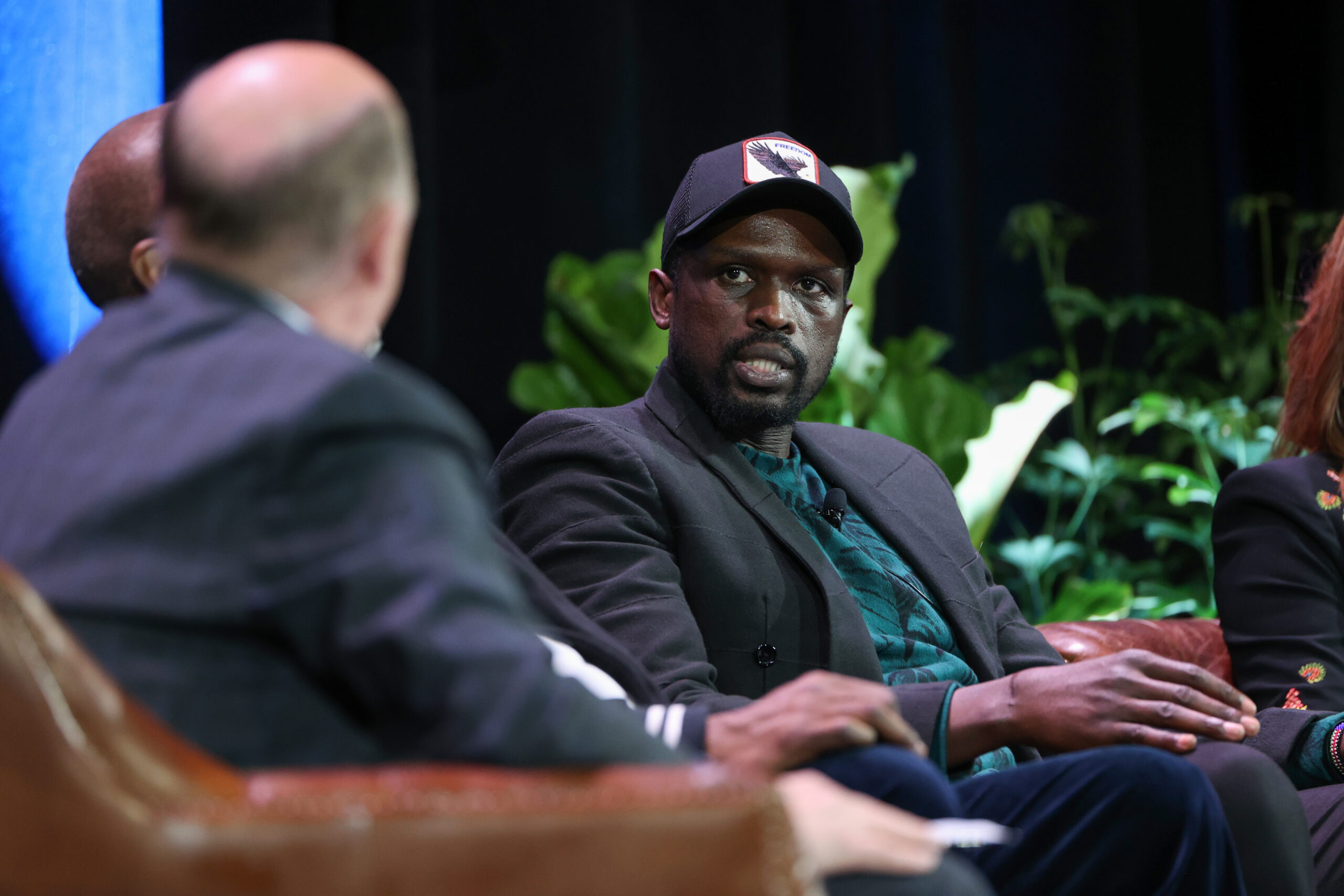
Most people who followed Luol Deng’s career remember him as a workhorse. The kind of player coaches trusted with the toughest defensive assignment every night, logged heavy minutes without complaint, showed up in the playoffs when it mattered, and never made the game about himself. Two All-Star selections across 15 seasons. More than 900 appearances. Roughly 15 points a game for over a decade.
What almost nobody was paying attention to was what he was doing with his paychecks.
While quietly earning $168 million on the court, Deng was building a $200 million real estate empire that would ultimately outgrow his basketball career.
It Started in His Rookie Year
Deng was drafted in 2004 by the Phoenix Suns as the seventh overall pick and quickly traded to the Chicago Bulls. He was 19 years old, hadn’t played a single professional game, and was already thinking about what came after.
The connection that changed everything happened at Duke. While playing there, Deng befriended the daughter of JPMorgan Chase CEO Jamie Dimon, which led to mentorship in real estate from Dimon himself, who at the time was living in Chicago as CEO of Bank One. That relationship gave Deng access to a level of financial thinking that most athletes don’t encounter until well after their playing days are over, if ever.
He began investing shortly after entering the NBA, initially focusing on projects in East Africa and London before expanding aggressively into the United States. By the time most players his age were negotiating their second contracts, Deng already had international real estate holdings.
The Portfolio He Built
Over time his portfolio grew to include hotels, resorts, luxury condominiums, and large multifamily apartment buildings across several major markets. Many of his US investments were made through his company D3N9, a holding firm named as a nod to his family roots, structured around long-term cash flow rather than short-term speculation.
The properties are spread across multiple countries. In the US alone his investments include spec houses in the Hamptons, multifamily units in Baltimore, and the Virgin Hotels in Las Vegas. The geographic spread is intentional. This isn’t a portfolio built on one market or one asset class. It’s diversified the way an institutional investor would build it, not the way a celebrity athlete typically approaches real estate.
The CFO of D3N9 is David Gross, a former Wall Street banker who was also Nipsey Hussle’s longtime business partner and the founder and CEO of Own Our Own, an inner-city-focused real estate fund. That last detail matters. The people Deng chose to build with weren’t just financially sophisticated. They had a specific point of view about what real estate could do for communities, not just portfolios.
The Mentor Who Saw It Coming
When Deng was still an active player, his advisor said something that now sounds less like a prediction and more like an understatement.
“I don’t think anyone has invested in real estate to this scale and level of sophistication while they are still an active player. Most people wait until they are finished. Luol is going to hit the ground running.”
That quote was about a player who was still suiting up for NBA games. He wasn’t waiting for a farewell tour to start building. He was doing it simultaneously, game by game, season by season, deal by deal.
What He Said About It
Deng doesn’t talk about this the way athletes usually talk about their business ventures, with the language of passion projects and brand extensions. He talks about it like someone who has been in the game long enough to understand how it actually works.
“If you know the market and you are using your leverage and doing the right deals, it is really nonstop with the opportunities.”
That line is worth sitting with. Not the opportunities are there if you work hard enough. Not follow your passion and the money will come. Know the market. Use your leverage. Do the right deals. It is a practitioner talking, not a motivational speaker.
The Part That Gets Overlooked
The $200 million number is the headline. But there is a thread running through Deng’s story that doesn’t show up in a portfolio valuation.
In 2020 Deng became involved with Own Your Own, a community development initiative aimed at revitalizing Chicago’s West Pullman neighborhood through Opportunity Zone investments. This is a neighborhood on the South Side of Chicago, the same city where he spent the better part of a decade as one of the most beloved players in Bulls history. He didn’t just write a check to something with his name on it. He invested in the community that watched him play.
Even during his playing years, he invested in schools, healthcare access, and youth programs in South Sudan through his foundation, targeting long-term capacity rather than temporary fixes. Deng was born in South Sudan and spent part of his childhood as a refugee before his family moved to London. He knows what communities need to survive and what they need to grow because he came from one that had to figure it out.
The empire and the mission aren’t separate stories. They’re the same one.
What It Means for the Athletes Watching
For most of his 15 seasons in the NBA, Luol Deng lived in the league’s middle class. He was durable, dependable, and consistently productive, the kind of player every coach trusted and every front office valued. What he never became was a franchise-defining superstar.
And yet he built more off the court than most franchise superstars ever will.
That’s the point. The platform to build doesn’t require being the most famous person in the league. It requires starting early, thinking clearly, finding the right people, and treating every paycheck like the first investment in something that will still be generating returns long after the final buzzer sounds.
Deng retired in 2019. His basketball career is over. His real estate company is not.
That was always the plan.




Yes he is grat
Yeah that was very smart and a good investment that Deng did frfr he set his family and him up and now they have Generation Wealth frfr.
I enjoyed reading about the different platforms they are correct.It is finding the right people.You don’t have to be famous.It just mean it didn’t know how to build.
I enjoyed reading about the different platforms.
I would like for everyone in the inner city read more stories like this one. Because everyone needs an education to fall back on .in case their sports career ends early.