


What LeBron James Joining the 76ers Means for the NBA
He said this was his last decision. He meant it in every direction.
On July 24, LeBron James announced he was signing with the Philadelphia 76ers — ending eight years in Los Angeles, closing the chapter on any retirement speculation, and detonating what is quietly the most consequential business story in the NBA this decade. Not just for Philadelphia. For the entire league.
The contract itself is almost beside the point. Two years, $8 million. A veteran’s minimum from a man who made nearly $53 million last season with the Lakers. LeBron walked away from a max deal to chase a championship on his own terms, and in doing so, handed the 76ers something worth orders of magnitude more than what they agreed to pay him.
What Philadelphia Is Actually Getting
Before LeBron plays a single minute at the Wells Fargo Center, the financial math is already reshaping the city.
Consulting firm The Boyd Company projected that James’ arrival could generate between $250 million and $430 million in regional economic activity during his first season alone — through ticket sales, tourism, hotel stays, local dining, merchandise, and sponsorship. That is a realistic estimate of what one player, one signature, can move in a market that was already one of the country’s most valuable sports cities.
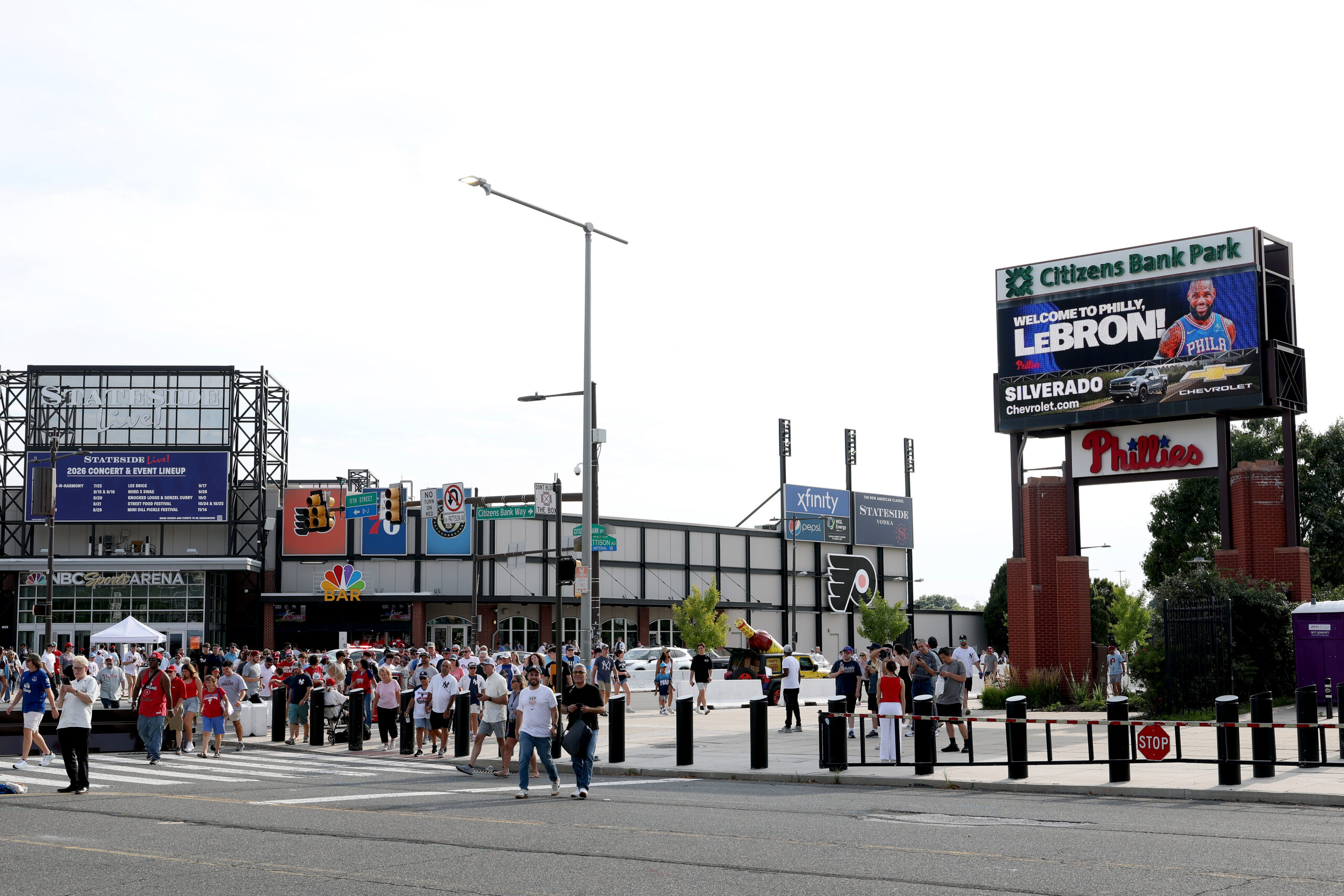
The numbers on the ground confirm it. Average ticket prices for a 76ers game last season sat around $68. The cheapest ticket for the team’s first preseason home game — a game LeBron is very likely not even going to play in — has already climbed to $283. StubHub recorded a 207-times jump in Sixers ticket demand within hours of the announcement. Welcome billboards went up across the city before the weekend was over. Restaurants near the arena started adjusting their staffing models for game days that are still months away.
The NBA is also expected to award Philadelphia the league maximum of 34 national television games next season. That number matters because national television inventory is how broadcast partners price their deals and how franchises build long-term valuation. Every extra nationally televised game is revenue, exposure, and positioning — for the 76ers and for the league.
The Roster He’s Walking Into
This is not a rebuild. The 76ers assembled legitimate championship infrastructure before LeBron ever picked up the phone.
Earlier in the offseason, Philadelphia acquired Jaylen Brown from the Boston Celtics — a former Finals MVP. Joel Embiid anchors the frontcourt as a former league MVP. Now add LeBron James, who at 41 is still one of the most complete basketball players on the planet. The 76ers have now added two former Finals MVPs in a single offseason, and paired them with one of the most dominant centers in the game.
The betting markets moved accordingly. Philadelphia went from an 8.9% projected probability to land LeBron on Friday morning to a top Eastern Conference title contender by Sunday evening. The Eastern Conference race, already remade by Giannis Antetokounmpo landing in Miami, now has a credible counterweight in Philadelphia.
What LeBron Is Really Playing For
The contract structure tells the story more honestly than any press release could.
LeBron gave up $40-plus million per year to sign for $3.9 million in year one, with a player option on year two. He chose Philadelphia over Golden State, Miami, and Minnesota — teams with existing relationships, familiar faces, or maximum flexibility. He chose the 76ers because he believes this roster gives him the best chance to win a fifth championship. That is what he said. That is what the math supports.
He called it his last decision. He was nearly retired. He spent weeks in genuine uncertainty before concluding that he still had something worth chasing. For someone with four championships, a legacy already secured across four decades and four franchises, the only thing left worth sacrificing comfort for is a chance at one more ring.
That clarity of purpose — playing for legacy, not money, not geography, not family — is the most compelling framing of LeBron’s final chapter. And it is an unambiguous PTV story. This is exactly what athlete ownership of one’s own narrative looks like. He could have cashed out. He chose to compete.
The Broader NBA Impact
LeBron’s arrival in Philadelphia does not just affect the 76ers. It reshapes the entire 2026-27 season’s narrative architecture.
Every arena that hosts Philadelphia this year becomes a destination game. Road crowds at every stop will carry a layer of fans who came specifically to see LeBron James in person, possibly for the last time. That drives ancillary revenue across 29 other markets. It drives ratings on every national broadcast. It drives content consumption on every platform the NBA touches.
The league has not had a story this clean in years — an all-time great, openly in his final season, chasing a fifth title on a team built to win, in a city that has been starving for a championship. That narrative writes itself across every medium, every market, and every conversation about basketball from October through June.
For Philadelphia, the win is already happening. For the NBA, the season just got a lot easier to sell.
LeBron James is not just joining the 76ers. He is giving the entire league its storyline.




Leave a comment