

Jaylen Brown Way.
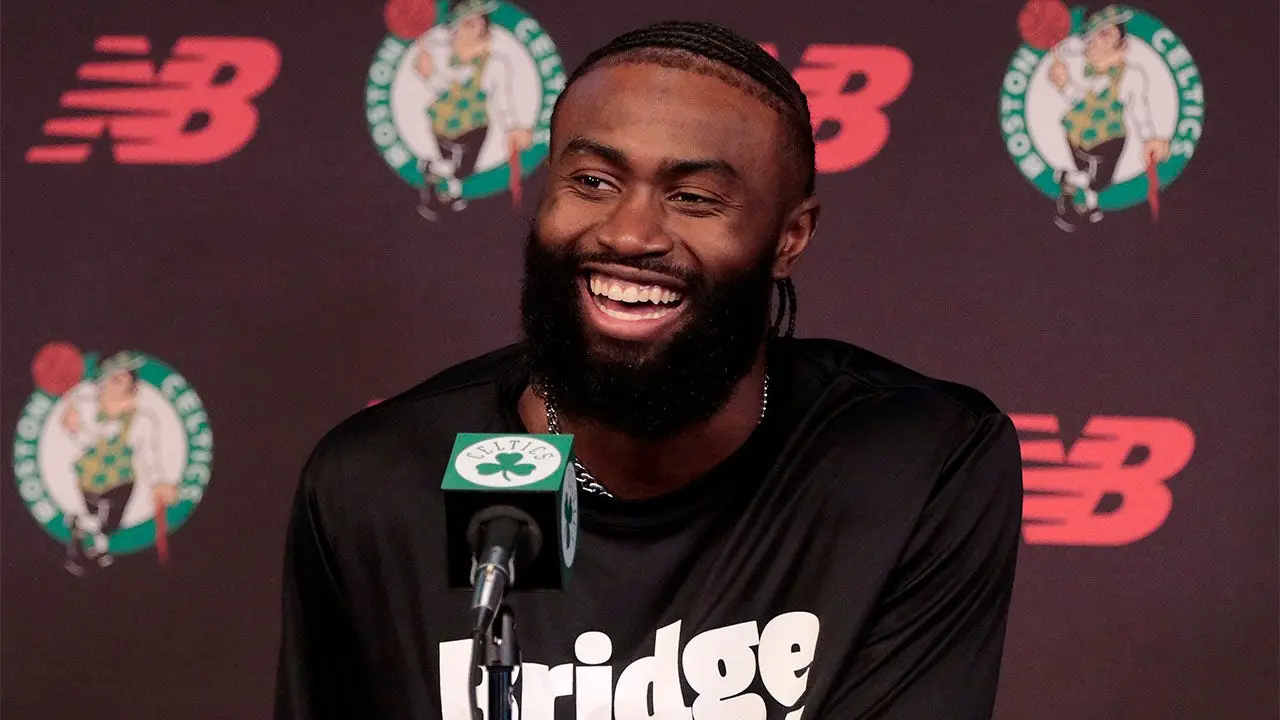
The trade happened on July 1. Boston processed it the way cities process losing someone they were not ready to lose — quietly at first, then loudly, then all at once.
On August 30, Jaylen Brown came back. He organized the 741 Frequency Fest on Boston Common — a free, open-to-everyone farewell that required no ticket, no wristband, and no reason to be there other than wanting to say goodbye. Thousands showed up. Many of them in Celtics jerseys with his number. A few in Sixers jerseys with his name.
He brought both trophies. The Larry O’Brien Championship Trophy and his Finals MVP trophy — carried to Boston Common so that every fan who wanted to hold them, touch them, or take a picture with them could do exactly that. Then he gave a family a car. Blindfolded a mother of four, led her and her children outside, and revealed a brand-new vehicle. No announcement. No cameras pre-positioned. Just Brown doing what Brown does.
What the City Said
Mayor Michelle Wu took the stage with city council members and said what the crowd already knew.
She had seen Brown in Boston schools. In classrooms. In parks. Not at events designed to generate press — at the kind of quiet, consistent community work that never makes the front page because it is not designed to.
“Jaylen has been about so much more than basketball here in Boston,” Wu said. “He has changed lives throughout this city. That’s why there are so many people here. That’s why we are all heartbroken and still trying to process what’s happening. We’re never going to let you forget us, and we are never going to forget you.”
Then the city council came on stage for what Wu described as a special presentation. They handed Brown a street sign reading “Jaylen Brown Way.”
“This is so you’ll never forget this city,” she said. “We won’t forget you.” Wu noted, with a laugh, that the sign does not come with free parking privileges.
Rep. Christopher Worrell followed on behalf of the state of Massachusetts, presenting Brown with a key to the city — specifically recognizing his work in the Black and brown community. Brown put his hands over his head. The crowd chanted JB. He posted one sentence on X when it was over: “God is crazy.”
What Brown Said
Brown eventually addressed the crowd and said what a decade of showing up for a city looks like from the inside.
“When I got to this city, I said I’m going to go to war for this city. I’ve met so many great people here. People that helped me in the community, that motivated me on my journey. People that supported me even when I didn’t support myself at times.”
He looked out at the crowd — the jerseys, the signs, the families — and said: “When I first got to Boston, I didn’t imagine this. I don’t do stuff for recognition, but I’m so grateful there are so many people here showing some love. Just know the feeling is mutual. Boston, I love you, thank you.”
He wore his championship ring the entire night. He broadcast live on Twitch for nearly two and a half hours. He never seemed like someone eager to leave.
What It All Adds Up To
The trade was not Brown’s choice. He spent ten years in Boston, won a championship, earned Finals MVP honors, invested millions into the community, ran the Boston XChange, funded Bridge Boston at MIT, and built the 7uice Foundation into one of the more substantive athlete foundations in the city’s recent history.
The Celtics moved on for basketball reasons. Boston did not move on. And Brown — in the way he organized this event, brought the trophies, gave the car, stayed on stage for hours, and showed up for everyone who came — made it clear that he has not moved on from the city either.
Philadelphia is getting a Finals MVP, a five-time All-Star, and one of the most complete athletes in the game. Boston got ten years, a championship, and a street.
Jaylen Brown Way. That one is permanent.

Leave a comment