





Kyrie Irving Pays $11,001 for LaRussell’s New Album as Indie Rapper Chases 100,000 Sales in 30 Days
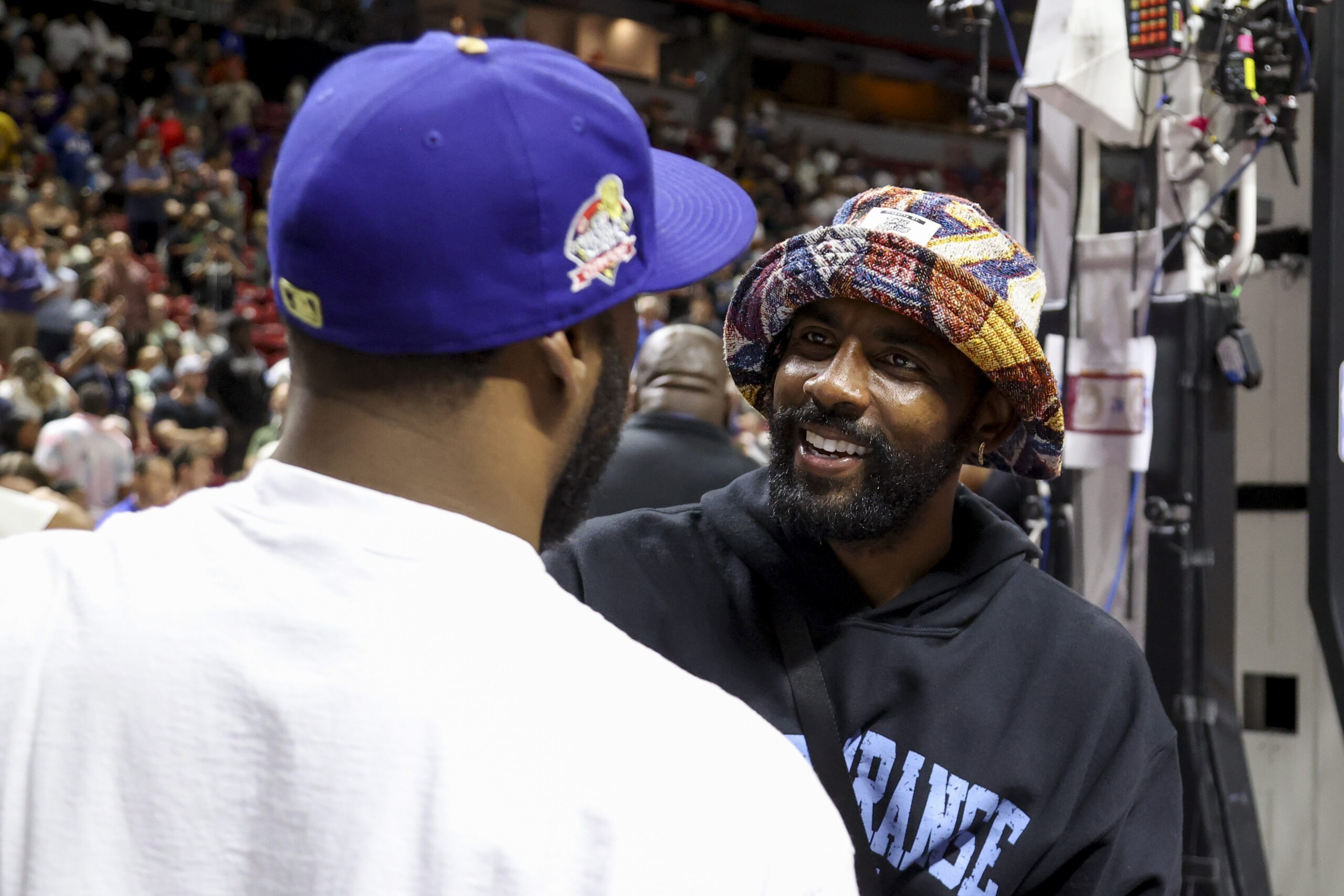
Kyrie Irving’s latest headline did not come from a crossover or a postgame interview. It came from a digital checkout.
The Dallas Mavericks point guard paid $11,001 for Bay Area recording artist LaRussell’s newest independent album, “Something’s in the Water,” a purchase that instantly turned a typical download into a conversation about support and leverage.
The timing mattered. LaRussell is publicly chasing an ambitious target: 100,000 units sold online and independently in 30 days, with fans allowed to pay any price for the project.
That is not a subtle plan. It is built for visibility.
And Irving’s buy made it louder.
LaRussell has been livestreaming throughout the push, regularly updating supporters on his progress and using the campaign like a running tally. In a clip he posted on X, Irving called into the livestream and made his intent plain.
“You earned it, bro. You deserve it,” Irving told him.
It was not just a compliment. Irving framed the purchase as action, not talk, describing it as “putting my money where my mouth is” and saying he wanted to see LaRussell reach his goal.
There is a reason that landed. In sports, everything becomes measurable. Points, possessions, pace, percentages. LaRussell’s rollout borrows that logic and applies it to music sales, with a clock attached and the score visible every day.
Irving did what players do when they respect a chase. He jumped in.
The model is simple on its face: pay what you want, buy the album online, and keep the push public. But the pressure point is what makes it different. LaRussell’s number and the timeline are fixed, and the sales are meant to be independent.
Flexibility on price does not mean softness on ambition. It means the market gets to speak in real time.
For fans, that can start at the lowest end. A press release tied to the rollout says supporters can pay as little as $1. The same release puts the average album sale at $22, suggesting many listeners are opting to go beyond the minimum.
Then there are the premium buys, the ones that double as endorsements.
Irving’s $11,001 was the biggest public number attached to the album so far, but it was not the only one to make waves. Snoop Dogg purchased the project for $2,500, another highly visible vote of confidence during the run.
LaRussell also posted that Cedric the Entertainer bought his copy for $1,000, adding another recognizable name to the list of people paying well above a standard album price.
The point is not that every supporter needs to spend like that. The point is that the ceiling is open, and a few buyers are choosing to make their support unmistakable.
This is the kind of story that sits at the intersection of sports and culture without needing a sponsorship or a partnership announcement. Most athlete support for music lives in the soft spaces: a track in a tunnel-walk video, a quick repost, a casual shoutout.
This was direct. This was cash.
And it was public, which is part of what makes the rollout work. When a buyer posts a number, it creates momentum that other people can see. When the artist shares the updates daily, the audience starts treating sales like a race.
One transaction does not complete a 100,000-unit goal. But one transaction can reset expectations about what support looks like, especially when it comes from a star athlete and is delivered to a live audience.
It also reframes the familiar phrase “it costs nothing to support.” Sure. But in a system that lets you choose the number, the real question becomes: what is the work worth to you today?
Irving answered with five figures.
There is no guarantee a campaign like this reaches the finish line. But the structure is built to keep the story moving. The updates are constant. The clock is always ticking. The total is always there.
That is the same reason fans track standings in January and scoreboard watch in March. People respond to visible stakes.
LaRussell made the stakes visible. Irving made a statement inside them.
Now the rest of the month becomes the test: can an independent artist convert attention into a number that big, on that timeline, with the whole thing happening in public?
For one night on a livestream, the question had a simple answer.
Buy in. Show it. Keep going.



Leave a comment