




Jerome Bettis Made a Promise in Detroit. The CyberBus Is How He’s Keeping It
The promise wasn’t made in Pittsburgh. It wasn’t made on a football field or in a locker room or at a Hall of Fame podium. It was made in inner-city Detroit, where Jerome Bettis grew up, at the Boys & Girls Club that helped raise him. He understood what that building meant — what it gave kids who didn’t have much else to lean on. When he got out, he decided he was going to do something about it.
That was decades ago. The CyberBus is what it looks like now.
What the CyberBus Actually Is
Jerome Bettis’ CyberBus is a state-of-the-art mobile classroom equipped with computers, Wi-Fi, and interactive technology designed to teach STEAM, Artificial Intelligence, computer science, digital literacy, and workforce readiness. It is a 40-foot-long, zero-emission electric bus donated by Blue Bird Corporation — not a converted vehicle, not a retrofitted trailer. A purpose-built, fully electric mobile learning lab rolling directly into the neighborhoods that need it most.
It travels to clubhouses and communities from Aliquippa to Shadyside, McKeesport to Millvale, offering after-school and summer programming in digital literacy, coding, AI, and workforce readiness. The programming runs at Boys & Girls Clubs of Western Pennsylvania locations and extends to Joey Porter’s Jasmine Nyree Campus, CNX’s Mentorship Academy, Mel Blount’s Youth Home, and community events across the region.
The bus generates zero emissions. The education it delivers is free.
Where It Started
In 1997, the CyberBus was a summer program where kids learned to configure desktop computers at Duquesne University and took them home. For many families, it was the first computer they had ever owned. That was the foundation’s very first program — a Hall of Fame running back teaching kids how to set up a desktop and sending them home with something that changed what was possible for their family.
The current CyberBus is the evolution of that original idea, scaled and modernized for what the digital divide looks like in 2026. Not just computer access, but AI literacy, coding, and the kind of workforce readiness that determines whether a young person can compete for the jobs the next decade is going to produce.
Bettis put it plainly: “Growing up in inner-city Detroit, I spent countless hours at the Boys & Girls Club. It’s where I learned about discipline, teamwork, and believing in yourself.” The CyberBus is his version of that building — mobile, reaching further, meeting kids where they are rather than asking them to come to it.
The Carnegie Mellon Collaboration
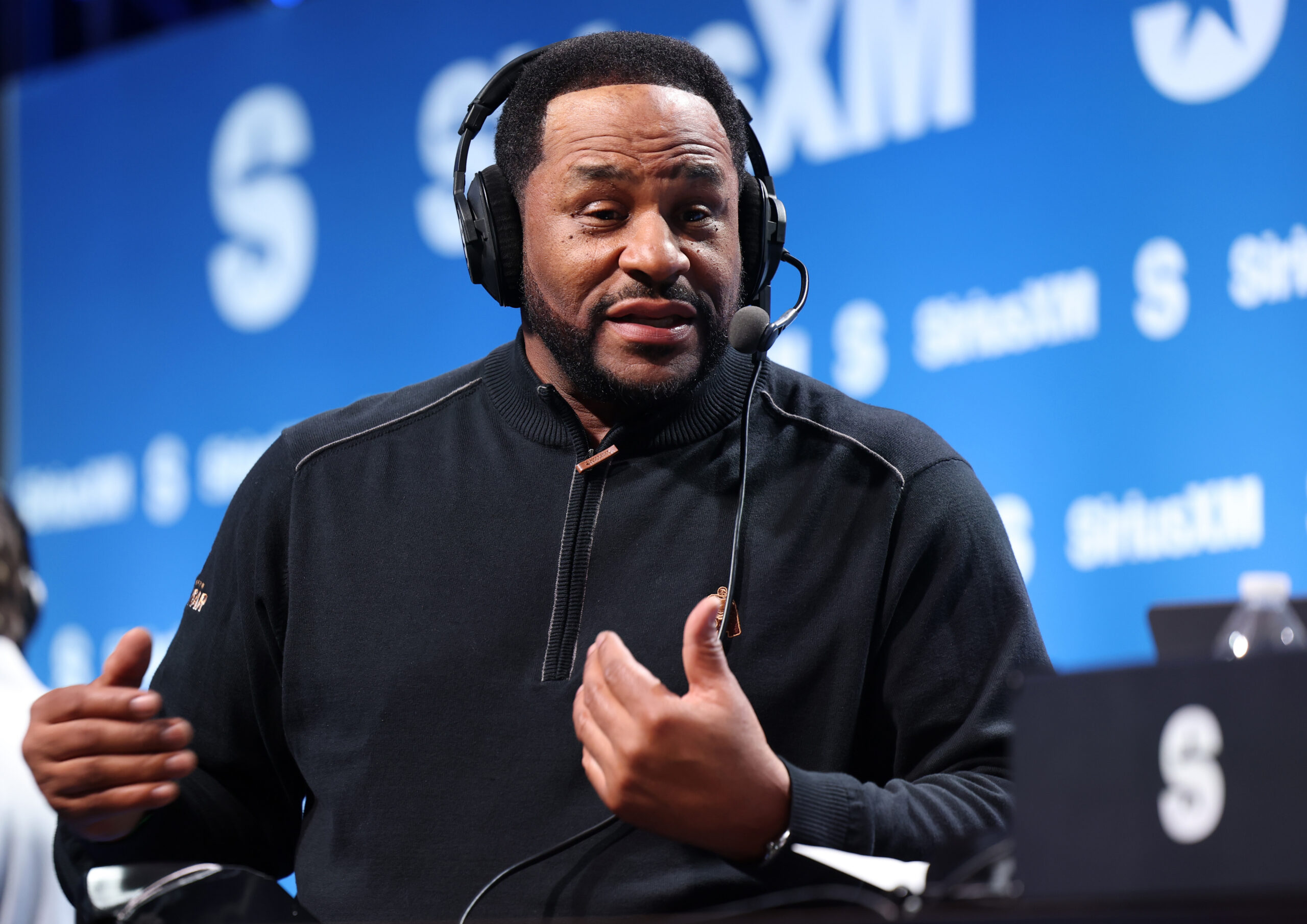
In March of this year, Bettis visited Carnegie Mellon University’s Entertainment Technology Center as part of a continued collaboration between The Bus Stops Here Foundation and Boys & Girls Club of Western Pennsylvania. While there, he recorded dialogue in the Sound Studio and underwent a full-body 3D scan in the CAVERN space so that interactive experiences could be developed using his likeness for the CyberBus.
That detail matters. Bettis isn’t just lending his name to a program and stepping back. He is literally inside the technology — his voice, his presence, his likeness built into the interactive learning experiences that kids will encounter when they step onto the bus. The engagement is personal in a way that most athlete philanthropy never reaches.
The Digital Divide It’s Addressing
The CyberBus was born from a problem that COVID-19 made impossible to ignore but that existed long before the pandemic arrived. When schools closed and learning went virtual, kids in under-resourced communities fell furthest behind — not because of ability, but because of access. No computer at home or reliable internet. No support network to help navigate a system that suddenly required both.
The Jerome Bettis STEMS program was designed to ensure youth in urban areas are equipped to engage in the STEM sector at parity with their peers, broaden the economic opportunities of underrepresented communities, and eliminate the barriers facing inner-city youth who want to enter STEM professions.
The CyberBus is the physical expression of that mission. It doesn’t wait for the infrastructure to catch up. It drives to where the gap is.
What This Looks Like as a Legacy
Jerome Bettis was one of the most physical running backs in NFL history. Six Pro Bowls. A Super Bowl ring. A Hall of Fame induction in 2015. The football legacy is secure.
The Bus Stops Here Foundation has been operating since the late 1990s. The programs have evolved as the needs have changed. What has never changed is the clarity of the mission: kids in underserved communities deserve the same shot at the future as everyone else, and if the systems aren’t providing it, you build something that does.
A 40-foot electric bus driving through Western Pennsylvania with AI learning tools, coding curricula, and Jerome Bettis’ voice on the speakers is not a PR initiative. It is a Hall of Famer doing exactly what he said he was going to do. The bus stops here — and it has for almost thirty years.




Leave a comment