





Harrison Barnes Didn’t Buy a Restaurant. He Bought a Bank
The conversation happened during Tyrese Haliburton’s rookie year. He and Harrison Barnes were teammates, and Barnes — already a veteran, already thinking about the arc of a life beyond basketball — told him the plan.
“HB told me this was the plan my rookie year,” Haliburton wrote on X when the news broke. “I couldn’t believe what I was hearing. That was the first time I realized dudes in the NBA got real families and are real adults.”
The plan was a bank.
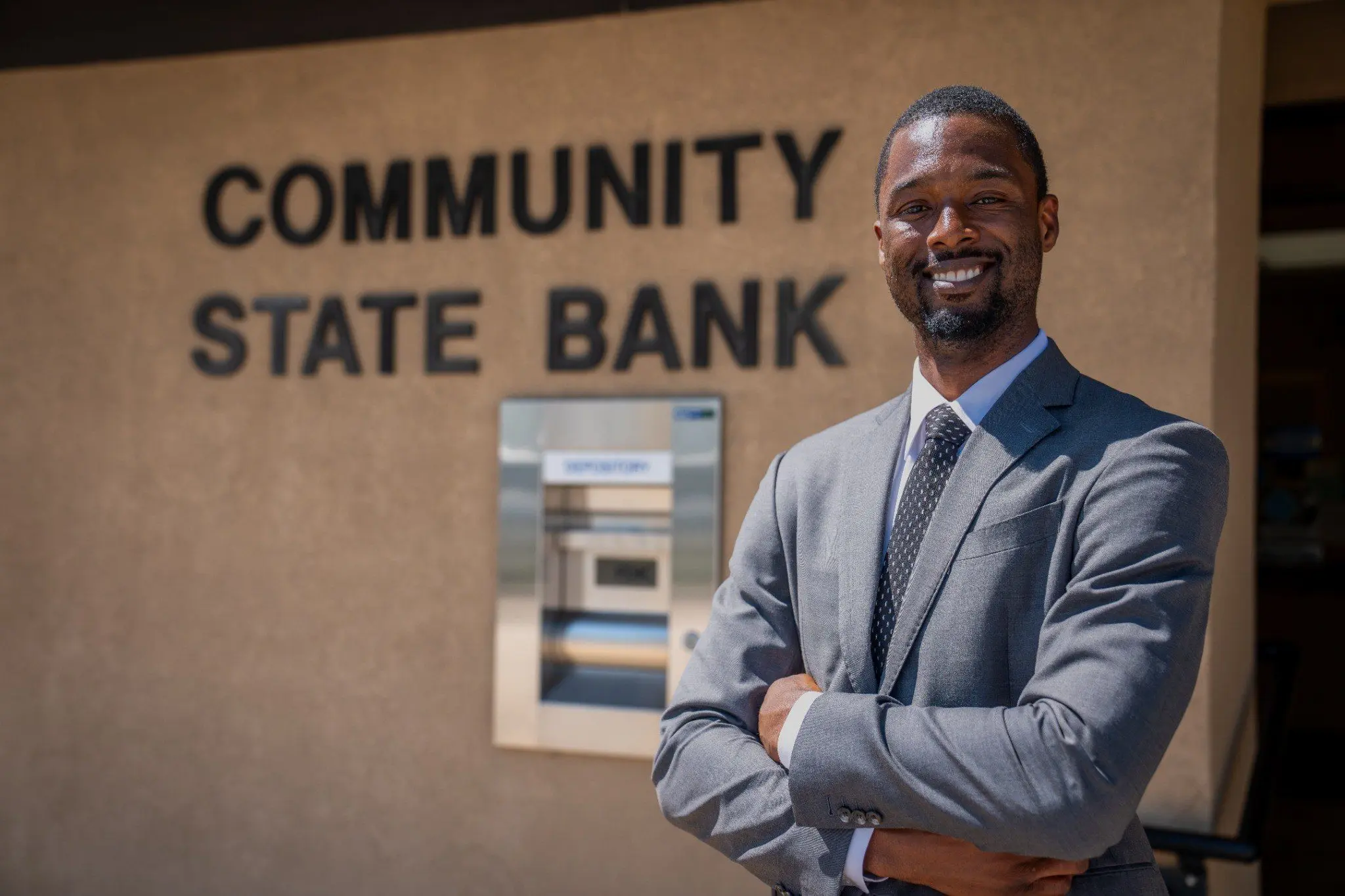
Barnes has now executed it. The San Antonio Spurs forward — 14 seasons in the NBA, $224.1 million in career earnings, NBA champion with the 2015 Golden State Warriors — has acquired Community State Bank in Paton, Iowa, through Barnes Bancorp, Inc., a company he chiefly owns. He invested $25 million of his own capital to take control of a regulated financial institution in his home state. He did it while still playing professional basketball. And he has been preparing for it for years.
The Bank and What It Is
Community State Bank in Paton has been operating for 70 years. Paton, Iowa has a population of roughly 220 people and sits less than an hour from Barnes’ hometown of Ames — where he attended Ames High School before becoming one of the country’s most recruited prospects, eventually choosing North Carolina and becoming the seventh overall pick in the 2010 NBA Draft.
The bank is small. The ambition is not.
“This is not a vanity project,” Barnes said. “We want to be Iowa’s next great bank.”
That statement — direct, specific, competitive — reflects how Barnes approaches everything he has built. He is not looking to put his name on something and walk away. He is looking to grow it.
How He Prepared
What separates this story from a typical athlete investment is the preparation behind it.
Barnes enrolled in the Iowa School for Banking through the Iowa Bankers Association — a professional development program — while still competing in the NBA. He attended during the offseason, studied the regulatory and operational mechanics of community banking, and assembled what he describes as a “Dream Team” board of experienced banking professionals to help him execute the vision.
His interest in community banking deepened during COVID-19, when he watched local financial institutions serve as lifelines for small businesses and families that larger banks had no meaningful relationship with. The pandemic made concrete something Barnes had been thinking about abstractly for years — that community banks play a role in local economies that no other institution can replicate, and that the opportunity to own and grow one in the place he came from was worth pursuing seriously.
Barnes & Co., his holding company, has been building toward this for years. Its stated mission is to protect and develop the human, intellectual, financial, and social capital of the Harrison and Brittany Barnes family. The firm’s focus is concentrated in financial services — traditional financial institutions complemented by select involvement in venture-backed B2B financial technologies. The bank acquisition is the largest and most visible expression of that strategy to date.
He manages it alongside his playing career through deliberate compartmentalization. “I think the biggest thing is that you have to be where your feet are,” Barnes said. “When I’m focused on basketball, and I’m in that lane, I’m 100 percent a basketball player.”
What a Community Bank Actually Does
The choice of a community bank — rather than a franchise, a brand, a production company, or a tech investment — is the detail that makes this story distinctive.
Community banks are the financial backbone of small-town and rural America. They lend to businesses that regional and national banks often pass over. They know their customers personally. They finance the farms, the hardware stores, the contractors, and the families that make up the economic fabric of places like Paton, Iowa. When a community bank disappears — and hundreds have, through consolidation and acquisition — the effects on local economies are lasting and often irreversible.
Barnes is not buying an asset class. He is buying into a relationship between an institution and a community. That framing is intentional. And it connects his investment thesis directly to a place and a people that shaped him.
The Broader Picture
Barnes has always operated with more intellectual depth than his public profile suggests. He has spoken extensively about financial literacy, athlete career longevity, and the importance of building infrastructure before the playing years end. The bank is the most dramatic execution of those values to date — but it is not a departure from who he has always been. It is the culmination of something he told a rookie teammate about fifteen years ago.
Haliburton said it himself: he couldn’t believe what he was hearing. That reaction — disbelief at the scale of a young player’s thinking — is often the first signal that someone is operating on a different timeline than the people around them.
Barnes was thinking about Paton, Iowa when he was a rookie in the NBA. Now it has his name on the bank.





Leave a comment