





Cooper Flagg Never Forgets the Kids Waiting by the Tunnel
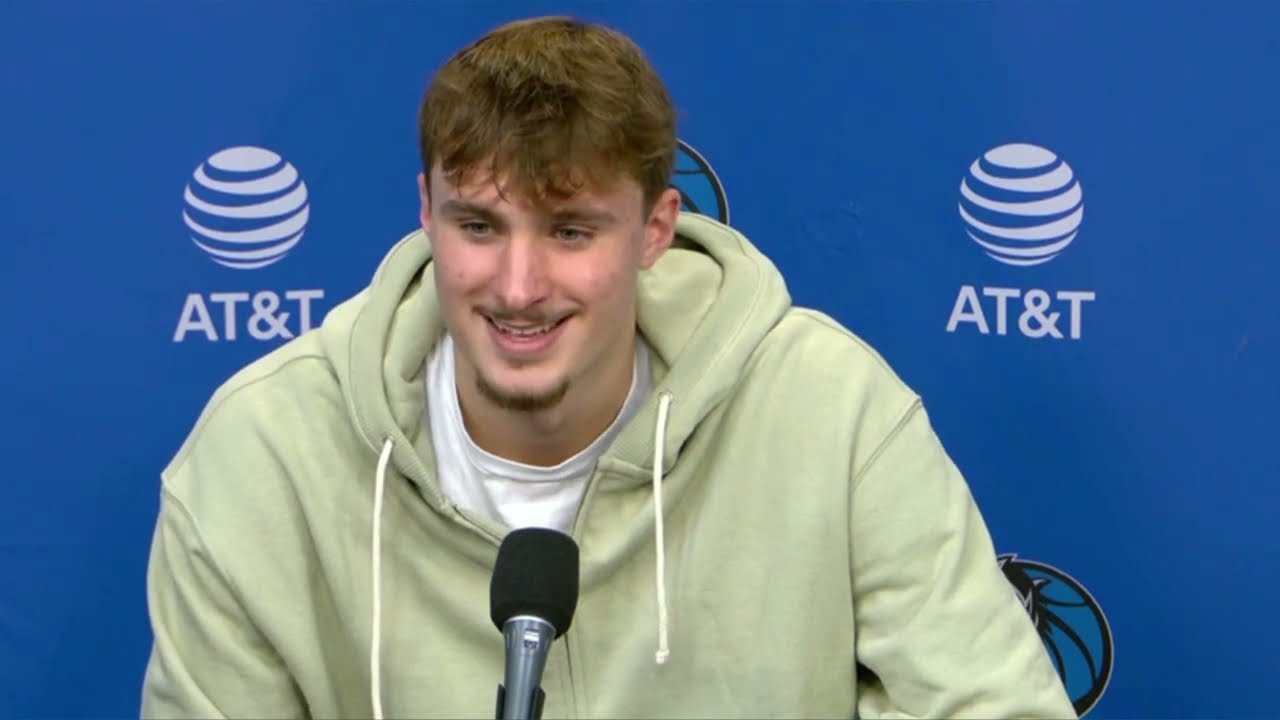
Cooper Flagg walks through an arena unlike that of most rising stars. He avoids tucking his head down, shielding his line of sight, or allowing security to create a moving wall around him. He slows down his pace instead. He looks around. He tends to stop frequently.
For autographs. For photos. For a quick conversation. For the kids who showed up expecting him to notice them. Flagg has already begun learning how to act as someone fans like, but he’s doing so without the cynicism or exhaustion that can arise when fame becomes routine. He considers those moments to be an extension of his past self.
Cooper Flagg yet again, the last off the court to sign autographs.
Paige Bueckers was also close behind.
Just a couple of No. 1’s in Dallas. pic.twitter.com/NOr5bcwKcN
— Abby Jones (@_abigaiiiil) November 22, 2025
“I’m 18. I’m not that far removed from being those kids,” Flagg said recently. “Wanting an autograph or wanting pictures with players when I was younger, so I know what it is. I know what it’s like to be there and support somebody and how much it can mean and even change somebody’s life just to stop and say hello.”
That perspective is guiding Flagg as he progresses through this early stage of his career. Although he is a teenager whose name has been whispered in basketball circles for years, he doesn’t seem to be trying to hide from attention. The fan experience, particularly for children, is seen by him as part of the job, not an inconvenience.
Despite the outcome, it never fails that Cooper Flagg takes the time to meet with young fans immediately following tough losses to sign autographs and take photos.
He shares his why:
“I’m 18. I’m not that far removed from being those kids and being a fan at an NBA game. Win or… pic.twitter.com/NANkuQBTCA— Abby Jones (@_abigaiiiil) November 6, 2025
Flagg’s approach is distinctive because he must navigate a fanbase that already treats him like a household name. Crowds gather early to watch him warm up. The kids are battling for his attention by pushing Sharpies through the railing in clusters. Adults try to fit into lines that are clearly meant for younger fans. Flagg still stops. He does it with patience, but without any performance. There’s no staged smile, no hurry-up demeanor.
He explains that he’s simply reusing the kindness he had hoped for. That authenticity resonates. Flagg’s openness is rare in a sport where public personas are constructed quickly and aggressively before a rookie has enough time to establish boundaries. The brand strategy is not forced; it’s simply a child who remembers longing for the slightest gesture from someone he admired.
Why It Matters
Gratitude, giving back, and staying grounded are topics often discussed by athletes. Even the most well-intentioned players can be broken by the schedule, travel, noise, and pressure. Rushing through the fan tunnel is something you experience—the pen-hand cramps.
The smile becomes automatic. Flagg will need to maintain his current level of sincerity to overcome his challenge. Over time, most players lose their game, not because of their ego, but because of survival. Perhaps Flagg’s youth has provided him with a new perspective.
He’s not nostalgic for his childhood; he’s actually still a kid, only with a different uniform and a brighter spotlight. His instincts may become more resilient if he stays close to his own fan days. The kids’ instincts waiting by the railing are essential. They lack knowledge of schedules or security concerns. They are aware of the sensation of the player they admire stopping and gazing at them. Flagg hasn’t forgotten that.
The Simple Power of Slowing Down
Flagg’s actions won’t be recorded on a stat sheet, and it’s unlikely to be replayed on TV shows. That’s precisely what he’s looking for. The profession is loud, but there’s a small window of humanity in it. Basketball stardom is not a requirement for distance. Cooper Flagg, 18, is learning the game, adapting to expectations, and identifying his ideal playing style. Currently, he is already aware of the person he aspires to be—the one who stops, looks up, and makes space for the kid he once was. He’s proving it by proving it with one autograph at a time.




Leave a comment